

%20(1).svg)
You're paying for every click. Someone searches, sees your ad, and lands on your page. The traffic shows up in the dashboard. Your phone stays quiet.
So you adjust. New ad copy, tighter keywords, different bid strategy. Still nothing.
At some point, you start questioning whether Google Ads works at all for your type of business.
Here's what's worth checking first: the ads are probably doing their job. An ad has one function — get the click. Everything that happens after the click belongs to the page.
The ad gets them there. The page has to do the rest.
Most business owners don't scrutinise their landing page the way they scrutinise their ad spend. The page got built, it looks decent, no one's complained. So when enquiries dry up, the ad account takes the blame.
I recently audited the landing page for an IT support company in Hampshire running Google Ads. Solid business, 20+ years of trading, real money going into clicks each month. The audit found serious problems throughout. None of them were in the ad account.
The hero section opened with “Hello, how are you?"

That's a direct quote. First line. Most valuable screen real estate on the page.
Someone clicking a paid ad for IT support has already shown intent. They want to know within seconds whether this company solves their problem. That greeting told them nothing — no indication of what the business does, who it helps, or why they should keep reading.
Research by Portent found that visitors who don't find what they need within the first few seconds are overwhelmingly likely to leave — and on a paid landing page, that means your ad budget disappears with them.
The navigation had 14 items

Fourteen top-level links, including social media icons in the header and a "Technology News" section no customer has ever clicked when looking for IT support.
They had "Services", "Packages We Offer" and "Problems We Solve" links, confusing any visitors who might be looking for pricing information ("which one do I click?").
Every extra link is a potential exit point. A landing page taking paid traffic has one job: move the visitor toward contacting you. Fourteen navigation options turn that into a maze. The page was essentially competing against itself.
Four or five navigation items with clear labels removes a significant chunk of the friction between a click and an enquiry.
The copy was written for IT professionals, not business owners

Throughout the page: "ITSM", "RMM", "VCIO". Internal industry terms that mean nothing to the person clicking the ad — a business owner who isn't sure what managed IT support involves, doesn't know what they need, and is already a bit nervous about handing their systems over to a company they've never met.
That kind of jargon doesn't signal expertise to someone who doesn't speak the language. It signals "this might not be for you." Visitors who don't recognise the terminology assume the service isn't relevant and leave.
Ironically, one of the company's own testimonials described them as being able to "translate IT speak into plain English." That's a genuine differentiator. It was buried in a carousel at the bottom of the page that most visitors never reached.
The copy needed rewriting around what customers actually care about: fast response times, systems that stay running, someone reliable to call when things break. Same service, different language.
The page took 17.7 seconds to load on mobile
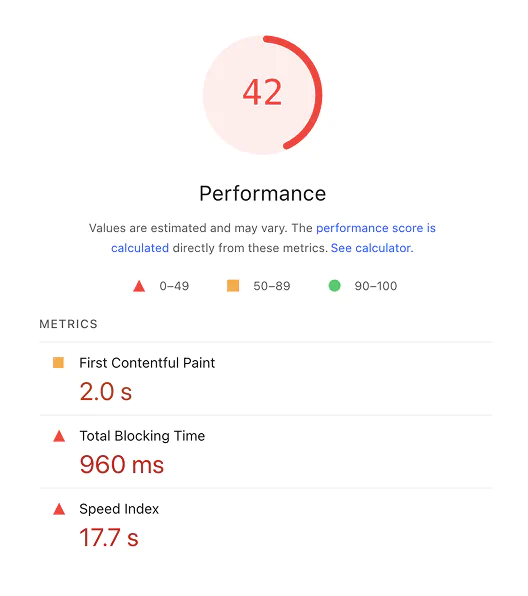
This has nothing to do with copy or messaging. But it belongs here because it was costing them visitors before a single word got read.
Research from Portent found that pages loading in 1 second convert at roughly 3x the rate of pages loading in 5 seconds. At 17.7 seconds on mobile, the majority of people clicking that ad on a phone got a blank or half-loaded screen and left.
The cause: unoptimised images, a hero slideshow pulling in multiple large files at once, and render-blocking scripts all firing simultaneously. All fixable. None of it visible from inside Google Ads.
Ad spend gone. Zero words read.
The page carried 3.2MB of images — and almost none of them showed the actual business
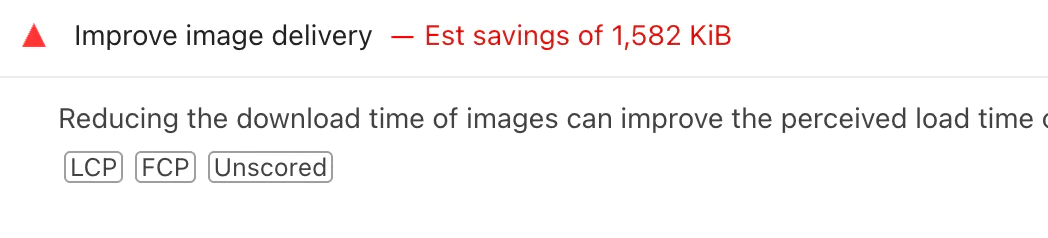
The hero section ran a rotating slideshow. Another section was just a full grid of stock photos showing people at desks in generic offices, glowing shields and hands touching futuristic interfaces.
I found this in the audit: almost none of the imagery showed the team, a client site, the office, or any real work. Just the same library photos every other IT company drops in when they can't be bothered to take real ones.
Too many stock photos on a landing page slow the page down and give visitors nothing to connect with. Someone deciding whether to trust you with their IT systems wants to see the people they'd be working with — not a posed model in a headset. Real photos of your team, your office, or a client site you've worked at build more trust than any amount of generic stock.
The 3.2MB image payload was also a direct contributor to that 17.7-second load time. Uncompressed, unoptimised, and largely decorative.
The CTA said “Get in touch" — with no button

Two lines of hyperlinked text at the bottom of the page. No button, no clarity on what happens when you do make contact, no reason to act now rather than later.
"Book your free IT consultation — we'll respond within 2 hours" is the same action. It tells you what you're getting and removes the uncertainty about next steps. Weak CTAs don't reduce clicks — they create doubt at the exact moment you need a visitor to feel confident.
What this audit found vs what the business assumed
Before the audit, the working assumption was that the ads needed work. Better targeting, maybe a higher budget, possibly a different platform.
After the audit: a 17.7-second mobile load time. A hero section that opened with a greeting. Fourteen navigation items. Jargon-heavy copy written for the wrong reader. A CTA with no button and no specificity.
None of that shows up in Google Ads reporting. All of it was losing enquiries every day.
Five things to check before touching your ad campaign
If you're running ads and not seeing enquiries, go through your landing page first:
- Does the headline tell someone what you do and who you help, within the first few seconds?
- Is the copy written in language your customers use, not language your industry uses?
- Do your images show something real — your team, your work, your office — and are they compressed for web?
- Does the page load in under 3 seconds on a mobile phone?
- Is there one specific action to take, and does the page explain clearly what happens when they take it?
If any of those is a no, that's where the enquiries are going — not into the ad account.
Why these problems stay hidden
Most landing pages aren't reviewed after they go live. The designer hands it over, it looks good on the day, and that's the last time anyone looks at it critically.
The business owner sees the page the same way every day — it becomes invisible. The slow load time feels normal because you're on a fast office connection. The jargon feels natural because you've used those terms for years. The weak CTA doesn't register because you know what you mean by "get in touch."
A visitor arriving cold from a paid ad sees something completely different. They have no context, no patience, and several other tabs open with your competitors.
That gap — between how a page feels to the person who built the business and how it lands on a stranger clicking an ad — is where most ad budgets disappear.
Want to know exactly what's costing you?
I'll go through your landing page and tell you what's broken, why it matters, and what to fix first. Specific findings, plain English, no vague suggestions.
.svg)